Join our mission in the fight against CSEA

Support us
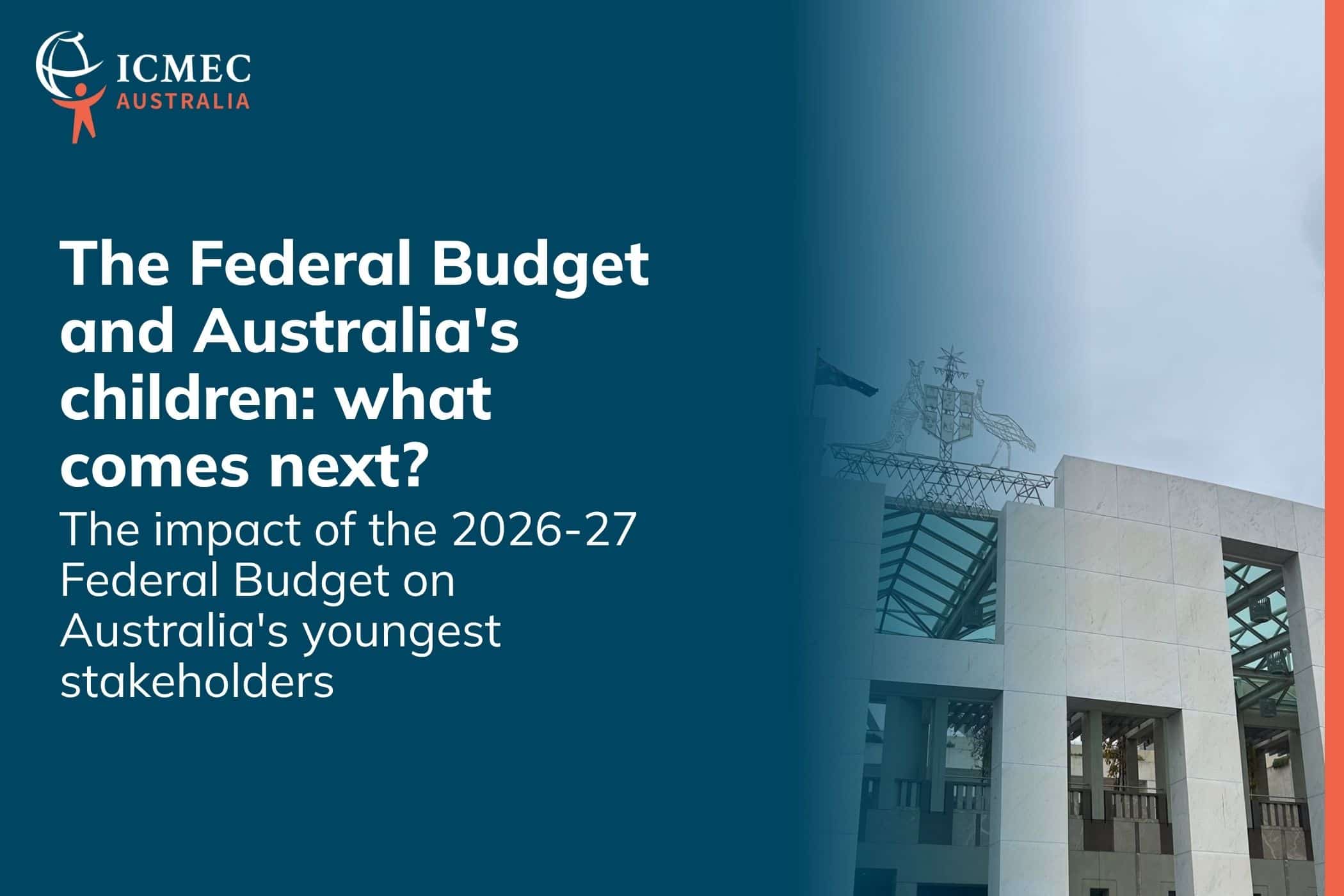
The impact of the 2026-27 Federal Budget on Australia's youngest stakeholders
Children make up nearly 23% of Australia's population. They are in every household, every suburb, every electorate – and as the 2026–27 Federal Budget sets the economic direction for the year ahead, children’s interests are at stake.
This Budget falls against a backdrop of competing and legitimate pressures. Cost of living, housing, defence, fiscal repair all of which touch the lives of every Australian. For children, those pressures affect their day-to-day lives too. Yet unlike most other groups with a stake in policymaking, children have no direct voice in how policy is shaped. That is what the child protection sector is for, and why this Budget, like every one before it, deserves to be read through the lens of our youngest stakeholders.
According to the Australian Council of Social Services, over 755,000 Australian children are currently living below the poverty line (ACOSS, 2025). Behind that figure are families navigating financial stress, overstretched services and the cumulative pressures that make safe, stable childhoods harder to sustain. Data released yesterday by Domestic Violence NSW points to something the sector has long understood: cost of living pressures and social isolation directly shape women and children's experiences of violence. Economic conditions and child safety are not separate policy domains; they are two parts of the same conversation.
This is also the landscape that the child protection sector works within. Advocates, researchers, law enforcement, industry, and government have continued to push tirelessly and collaboratively for a stronger national response to child safety – and the needle has moved, asserting Australia’s position as a global leader in this space. Frameworks have strengthened. Cross-sector collaboration has deepened. Conversations are happening in ministerial offices and on the floor of Parliament.
ICMEC Australia's research into the economic cost of child sexual exploitation adds weight to this. The downstream burden on hospitals, courts, mental health services and people's capacity to participate in work and community is significant and can be minimised through investment in prevention.
This Budget is, in many respects, a significant one. Within its landmark measures on tax, defence and housing sit tangible commitments that speak directly to the safety and wellbeing of children. Continued investment in the National Strategy to Prevent and Respond to Child Sexual Abuse, the ongoing work of the eSafety Commissioner shaping child safety in the digital environment, and funding to ensure victims of domestic and sexual violence have the care and support they need – these are important foundations worth building on.
The foundations for a stronger child safety system are being laid. What comes next is building on this through legislative architecture which includes a Digital Duty of Care, the growing importance of the AI Safety Institute, and sustained investment in all the systems that surround children.
Australia's child protection system is filled with people and organisations deeply committed to building a safer world for our children. Every sector has a part in this – and the more voices at the table, the better the outcomes for children.
ICMEC Australia acknowledges Traditional Owners throughout Australia and their continuing connection to lands, waters and communities. We pay our respects to Aboriginal and Torres Strait Islanders, and Elders past and present.